
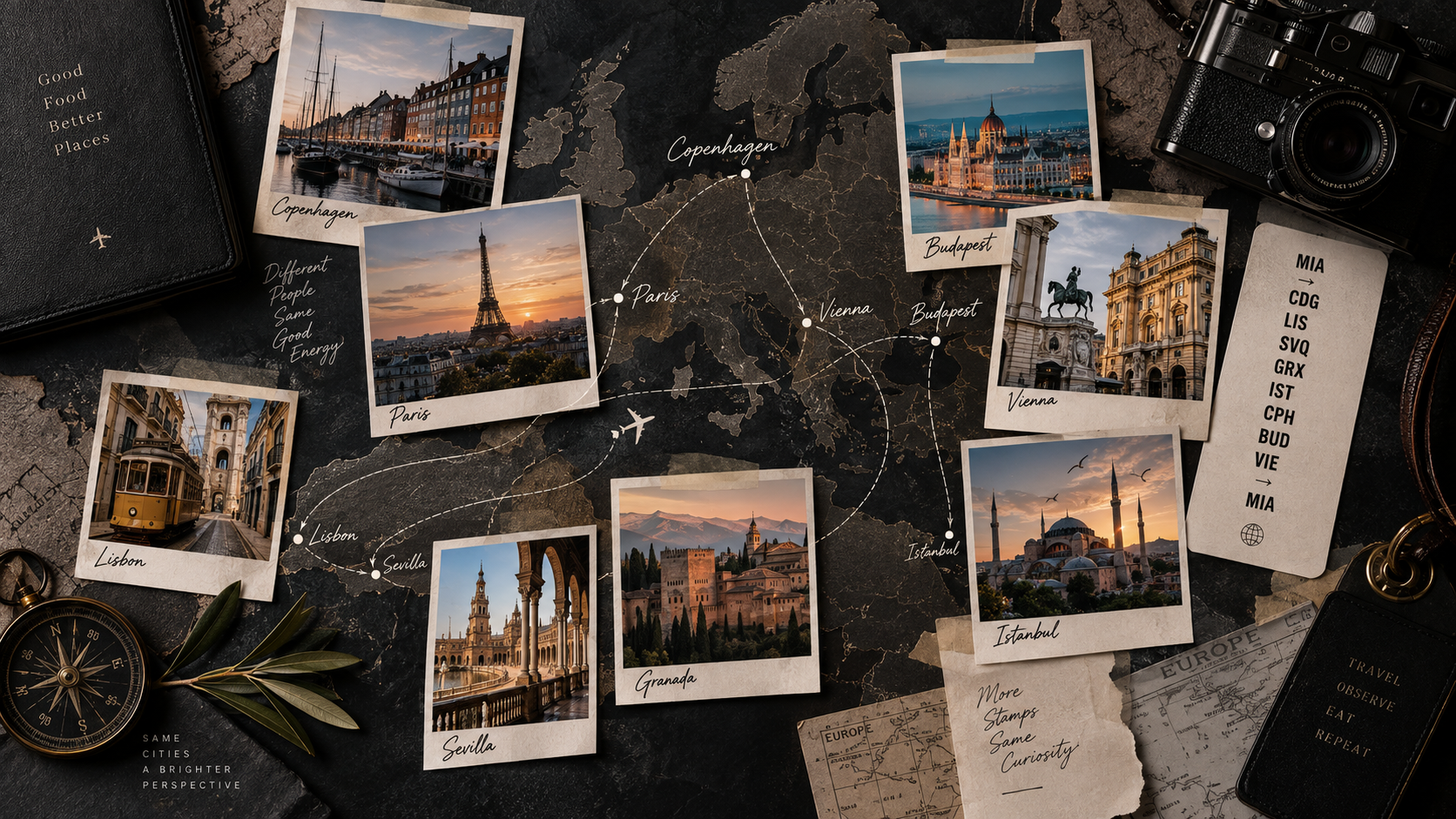

I traveled through Lisbon, Seville, Granada, Paris, Istanbul, Copenhagen, Budapest and Vienna with a camera and a long list of things I wanted to experience. Some of the trips started with work. Others gave me more time to explore. But almost everywhere, I found myself doing the same thing.
Walking.
I walked through museums and neighborhoods, stopped for architecture, food and photographs, and kept moving whenever another street looked interesting. Eventually I realized I was learning more about each city in the distance between the places I had planned to visit than from the itinerary itself.
Five minutes became fifty
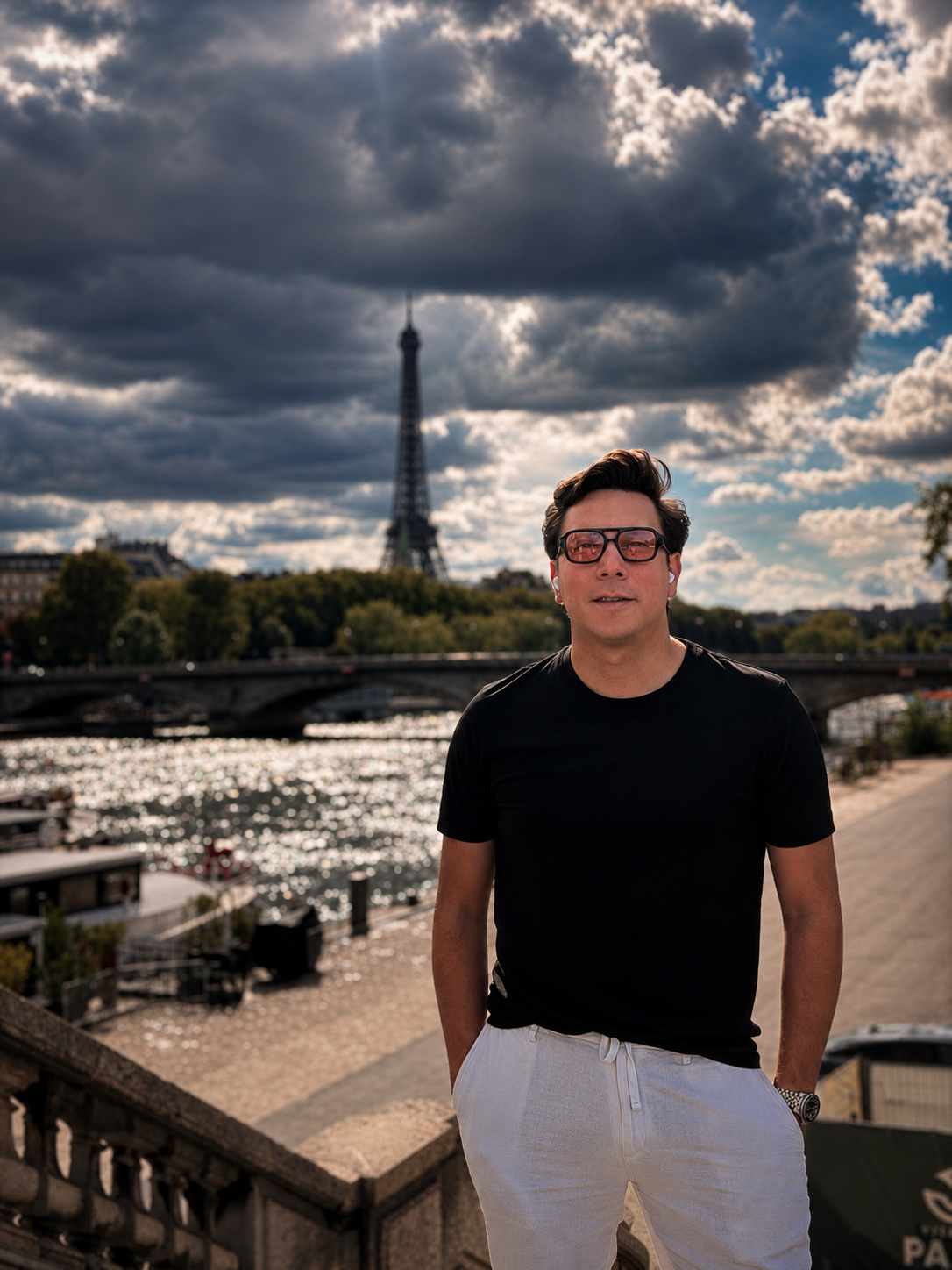
Paris captured that feeling perfectly. A five-minute walk could easily become fifty. Put on a good playlist, start walking, and suddenly getting somewhere stops being particularly important.
There was always something else to look at. Another street. Another building. Another detail worth photographing. Another reason to keep going.
I wasn’t trying to discover some secret version of Paris. I was simply enjoying what was already in front of me, and I think that is what I liked most about it. Paris made wandering feel productive. You could spend an afternoon moving through the city without accomplishing much on paper and still feel you had experienced something.
Sometimes getting lost is the experience.
Different cities ask for different attention
What interested me most across the trip was how quickly the feeling changed from one city to another.
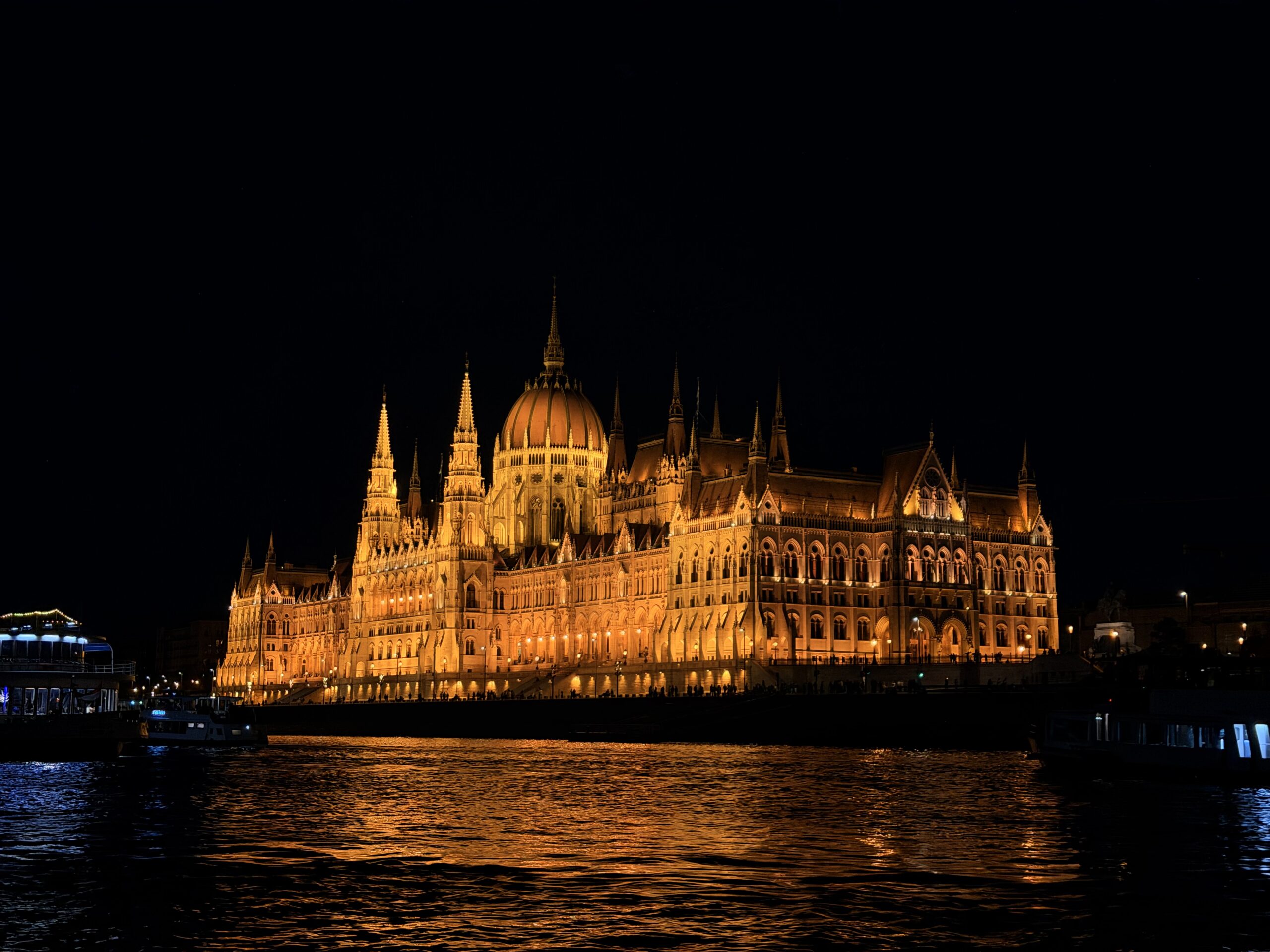
Portugal felt peaceful. Seville constantly pulled my attention toward color, art and architectural detail. Granada added another perspective to Spain and another rhythm to the journey. Paris made me want to keep walking. Istanbul was almost the opposite, an explosion of energy, contrast and movement. Copenhagen changed the atmosphere completely: different architecture, different people, different views, a completely different pace. Budapest surprised me with its architecture, food and personality.
None of them needed to be better than the others. The contrast was the point. Going from one place to another made me notice things I probably would have missed if I had experienced each city in isolation.
Vienna asked the sharpest question
Vienna was the shortest stop and the one I keep arguing with. The food culture is superb. Coffee houses that treat sitting for two hours as the point rather than a problem, and a standard of execution that would embarrass most cities its size.
I experienced the welcome as cooler. Service was correct, formal, unhurried and rarely warm. It took me a day to stop reading that as indifference. I came to see it as a different idea of what hospitality owes you: precision instead of charm.
Miami sells the opposite. Charm first, precision when it can manage it. Neither city is wrong. But Vienna made me notice how much of what we call hospitality in Miami is actually personality, and what is left standing when you take the personality away.
Museums change the street
I also spent a lot of time in museums, and something interesting happens when you combine museums with walking. You leave after hours of looking at art, design, history or architecture, and suddenly you pay more attention to the city outside.
A facade becomes more interesting. A small architectural detail catches your eye. You start noticing proportions, materials and colors you probably would have walked past earlier. The museum doesn’t necessarily end when you walk through the exit. Sometimes it changes how you see the next few hours.
That became the rhythm of this trip. Walk. Look. Learn something. Eat something. Take photographs. Keep walking. Nothing particularly complicated, but it gave me enough time to actually notice where I was.
The camera makes you look twice
Photography has also changed the way I travel. Having a camera with me gives me a reason to stop. Not because every photograph needs to be extraordinary, but because taking one forces you to look twice. You start noticing details instead of simply recognizing landmarks.
Sometimes the photograph is architecture. Sometimes food. Sometimes a wider view. Sometimes it is simply something about a street that feels different from home. The camera becomes less about proving where you went and more about remembering how you saw it.
Looking back through the photographs from this trip, that is what I enjoy most. They don’t all tell the same story. Neither did the cities.
Travel is better without keeping score
There is an easy temptation with travel to start counting. Countries, cities, restaurants, museums, flights, places crossed off a list. I understand it. I had an itinerary too.
But the moments I remember most rarely have anything to do with completing it. They came from having enough time to walk a little farther. To stay somewhere longer than planned. To stop because something looked interesting. To have a good meal without immediately thinking about what came next. And to accept that seeing less can sometimes mean experiencing more.
That became especially clear moving through so many different places in one journey. Different people, different architecture, different food, different histories, different ways of living. Yet curiosity worked everywhere.
What I brought home
I came back with photographs from eight cities. But the photographs are really records of something else. Attention. For a few weeks, everything was unfamiliar enough to make me look more carefully.
That may be one of the things I value most about travel. At home, familiarity makes us efficient. We know where we’re going. We take the same roads. We stop noticing things because we’ve already seen them. Travel interrupts that.
Suddenly you’re paying attention again. You look up. You walk instead of rushing. You enter a museum because you have the afternoon. You take the longer street because it looks better. You let five minutes become fifty.
Somewhere between Lisbon and Vienna, that became the part of the trip I appreciated most. The destinations mattered. The museums mattered. The architecture, food and photographs mattered. But so did everything between them.
An itinerary tells you where to go. Walking gives a city enough time to show you who it is.
Carlos A. Gómez Zambrano
CEO & Editorial Director of GCC Media. Based in Miami, he writes across business, hospitality, aviation and culture.
Founder profile →