
On a Tuesday morning in April 2018, a Boeing 737 climbing out of New York lost a fan blade. The blade released at the root, the engine inlet and cowling broke apart, and debris struck the fuselage and a cabin window. The aircraft depressurized. The crew descended and landed at Philadelphia. One passenger died.
Twenty months earlier, a nearly identical failure had occurred on another Southwest 737 climbing over Florida. That aircraft diverted to Pensacola. Nobody was hurt. At the time, it was the first time a fan blade had ever fractured at the root in this engine type.
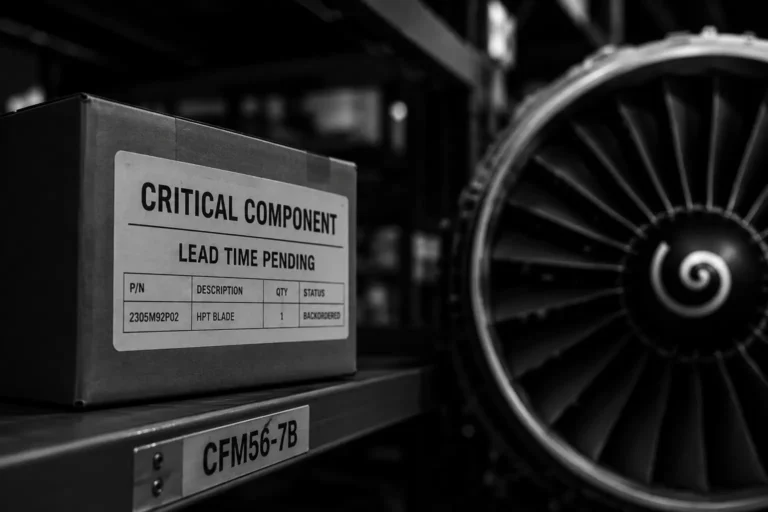
Both aircraft were powered by the CFM56-7B. The CFM56-7B powers most of the world’s 737s and is one of the most produced jet engines ever built. The investigation that followed has now been published as a peer-reviewed case history by engineers from the National Transportation Safety Board, GE, and Safran Aircraft Engines. For anyone who works in engines, it is a lesson in how failures actually happen: slowly, invisibly, and in the last place a passenger would ever look.
Where the crack starts
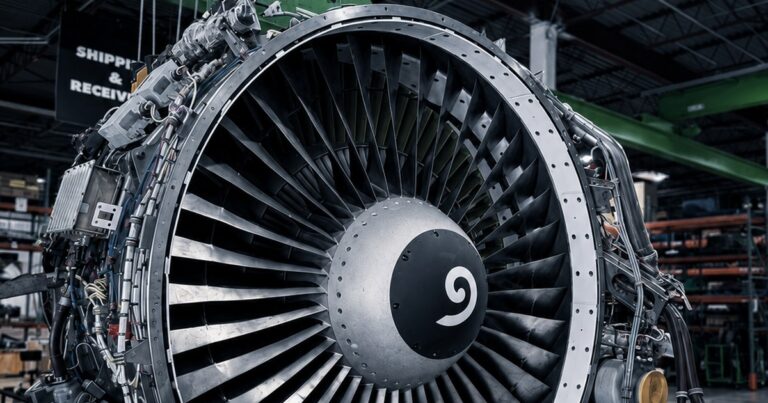
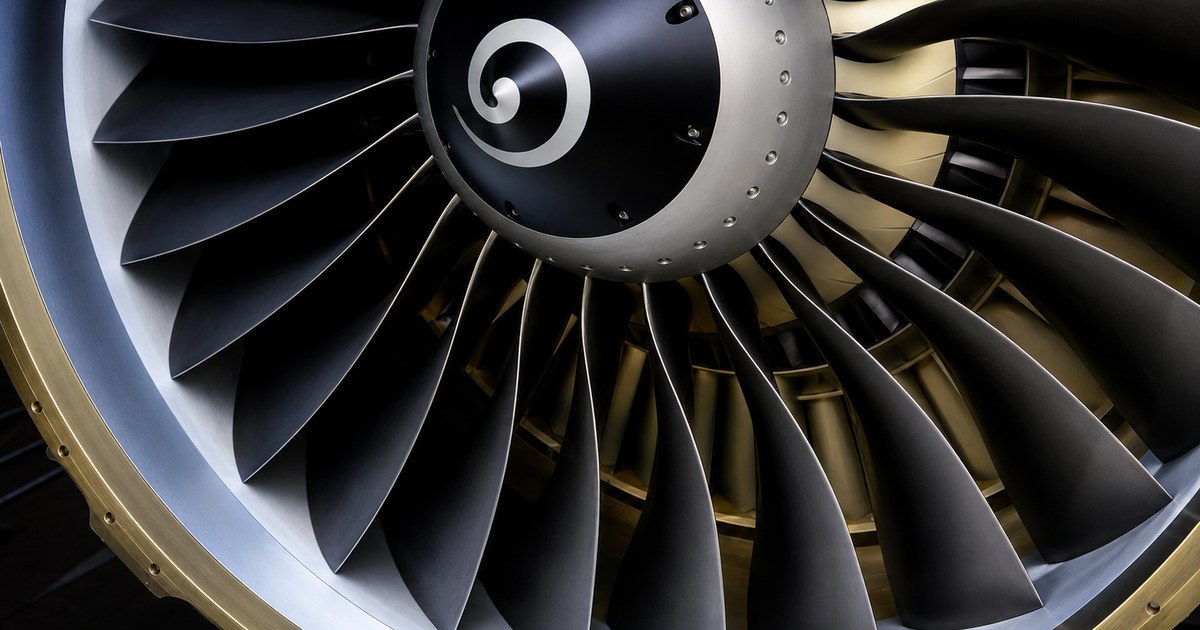
A CFM56-7B fan has 24 titanium alloy blades. The part that fails is not the airfoil you can see from the terminal window. It is the root, specifically the dovetail, the flared foot of the blade that locks into a slot in the fan disk. It is the joint that holds a spinning blade against enormous centrifugal load.
Dovetails live in a punishing environment: high contact stress, constant micro-movement against the disk and the shims between them. To defend against that, the blades are shot peened, a process that hammers a compressive stress into the surface layer. That compression is what resists fatigue cracking. The contact faces are then coated and treated with a dry-film lubricant to keep friction down.
The finding at the center of the investigation is that on many of the cracked blades, that protective compression had relaxed. The peening was there. Its benefit was not. Cracks initiated at the dovetail contact face, grew under normal flight cycles, and eventually reached a size the blade could no longer carry.
Why it took two accidents to see it
The numbers explain how a defect this rare stays hidden. By August 2018, CFM estimated roughly 356,000 fan blades had been delivered for some 14,659 CFM56-7B engines, accumulating on the order of 360 million flight hours. Against that denominator, two events are close to statistical invisibility, right up until it is not.
The service histories are the operator’s lesson. The 2016 blades had run more than 62,000 hours and 38,000 cycles since new, with roughly 18,000 cycles since their last overhaul. The 2018 blades had over 55,000 hours and 32,600 cycles, with about 10,700 since overhaul. These were not neglected parts. Records showed they had been lubricated on schedule.
But the schedule itself was young. Early in the CFM56-7B’s life, dovetail relubrication was not a required maintenance item at all; it became part of the plan around 2000, at intervals not to exceed 5,000 hours or 3,000 cycles. Blades that flew their first years before that requirement existed likely saw higher peak contact stresses and more coating wear than anyone was tracking. Compounding it: investigators found that some blades had been overhauled after cracks had already initiated. The overhaul restored the surface and masked the original condition, while the crack continued underneath.
What actually changed
The response is the part MRO people should read closely, because it is entirely an inspection-and-interval story rather than a redesign story.
Visual inspection procedures and tooling for coating condition were improved. Eddy current inspection was written into the blade overhaul process. Ultrasonic testing was added at every blade relubrication. One-time ultrasonic inspections were mandated for high-time blades, with early priority given to those with the most cycles since overhaul, later widened to the oldest blades manufactured before the dovetail was modified. Finally, repetitive ultrasonic inspection every 1,600 flight cycles was required for all CFM56-7B fan blades once they pass 17,000 cycles since new. And because inspection happens at relubrication, the lubrication intervals tightened with it.
The NTSB’s conclusion was that eddy current at overhaul plus ultrasonic at relubrication should catch cracked blades and get them off the wing before they reach critical size.
The operator’s takeaway
There is a tendency to read accident reports as stories about a broken part. This one is better read as a story about intervals, about the fact that a maintenance program is a living hypothesis regarding how fast damage accumulates, and that the hypothesis can be wrong for twenty years before anyone finds out.
Three things carry over to any shop handling this hardware. First, surface treatments are not permanent: the presence of shot peening in the build record does not guarantee compressive stress is still doing its job decades later. Second, overhaul can erase evidence: a restored surface may sit on top of a crack that started before the visit. Third, the parts most at risk are frequently the oldest, the ones that flew their early lives under a maintenance regime that no longer exists.
For South Florida, that last point is not abstract. Miami’s aviation economy is built substantially on mature narrowbody fleets and the aftermarket that sustains them. Its shops, traders, and lessors keep high-cycle CFM56 assets flying. High-time blades are the local business. So are the inspections that now govern them.
The blade that failed over Pennsylvania weighed a few pounds and sat where nobody could see it. It is a reasonable reminder of where value and risk actually live in this industry: not in the airframe, but in the parts that turn.
Reporting based on “Fan Blade Fatigue Fractures in CFM56-7B Engines” by M. R. Fox (NTSB), W. R. Rossey Jr. (GE), and M. Raguet (Safran Aircraft Engines), published in the Journal of Failure Analysis and Prevention, vol. 23 (2023), pp. 1438–1451, and on NTSB Aircraft Accident Report NTSB/AAR-19/03. The views of those authors and agencies are their own.
Carlos A. Gómez Zambrano
Founder and Editor of GCC Media. In commercial aviation and engine MRO since 2015, and in Miami hospitality and restaurant marketing since 2016.
Founder profile →